
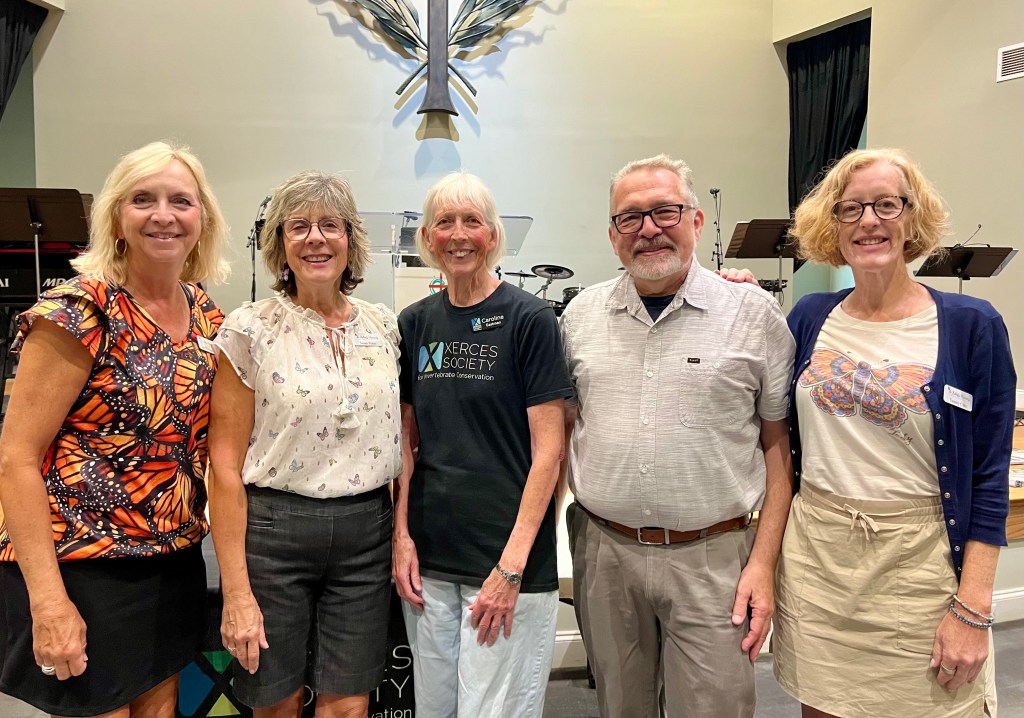
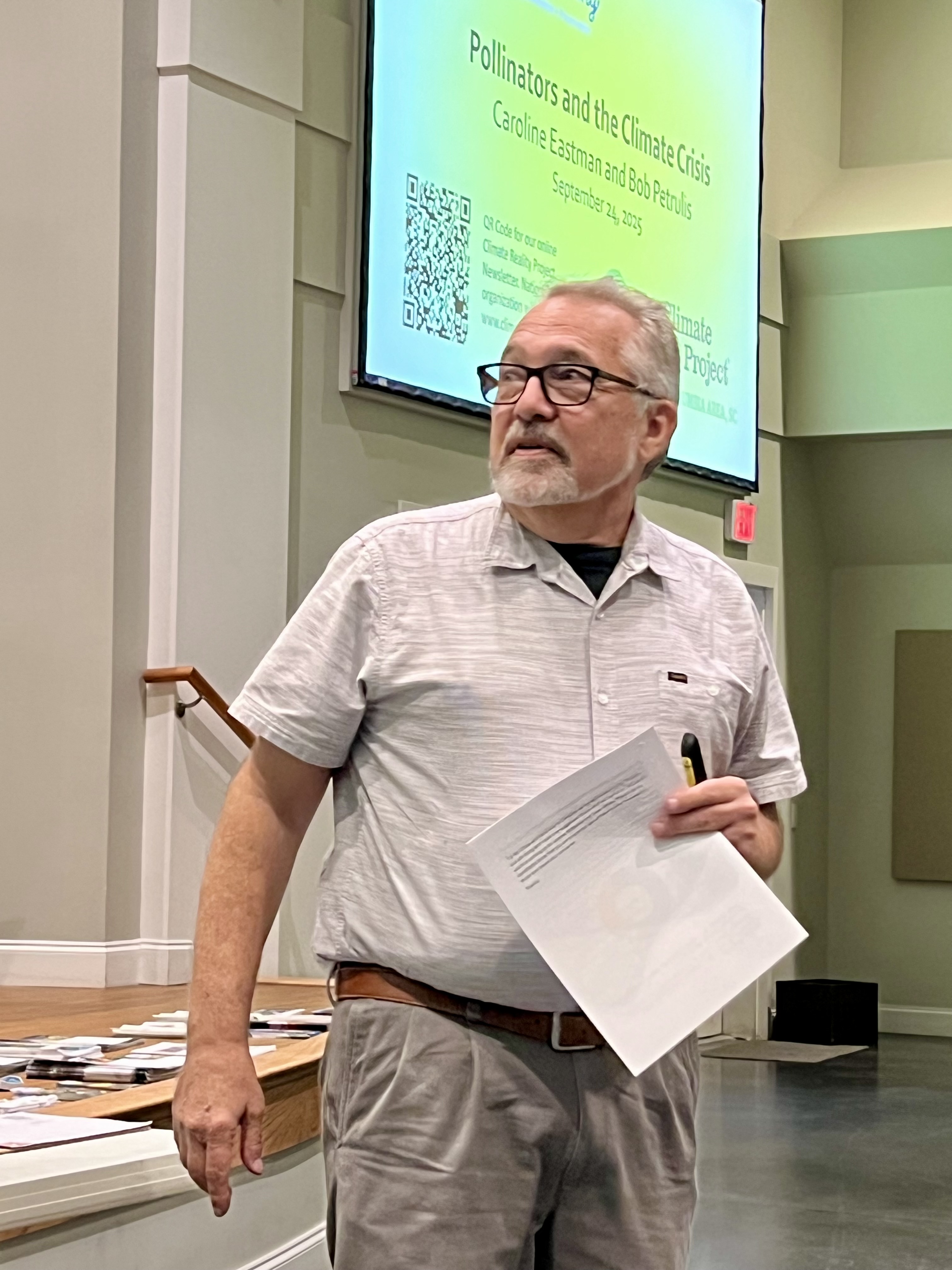
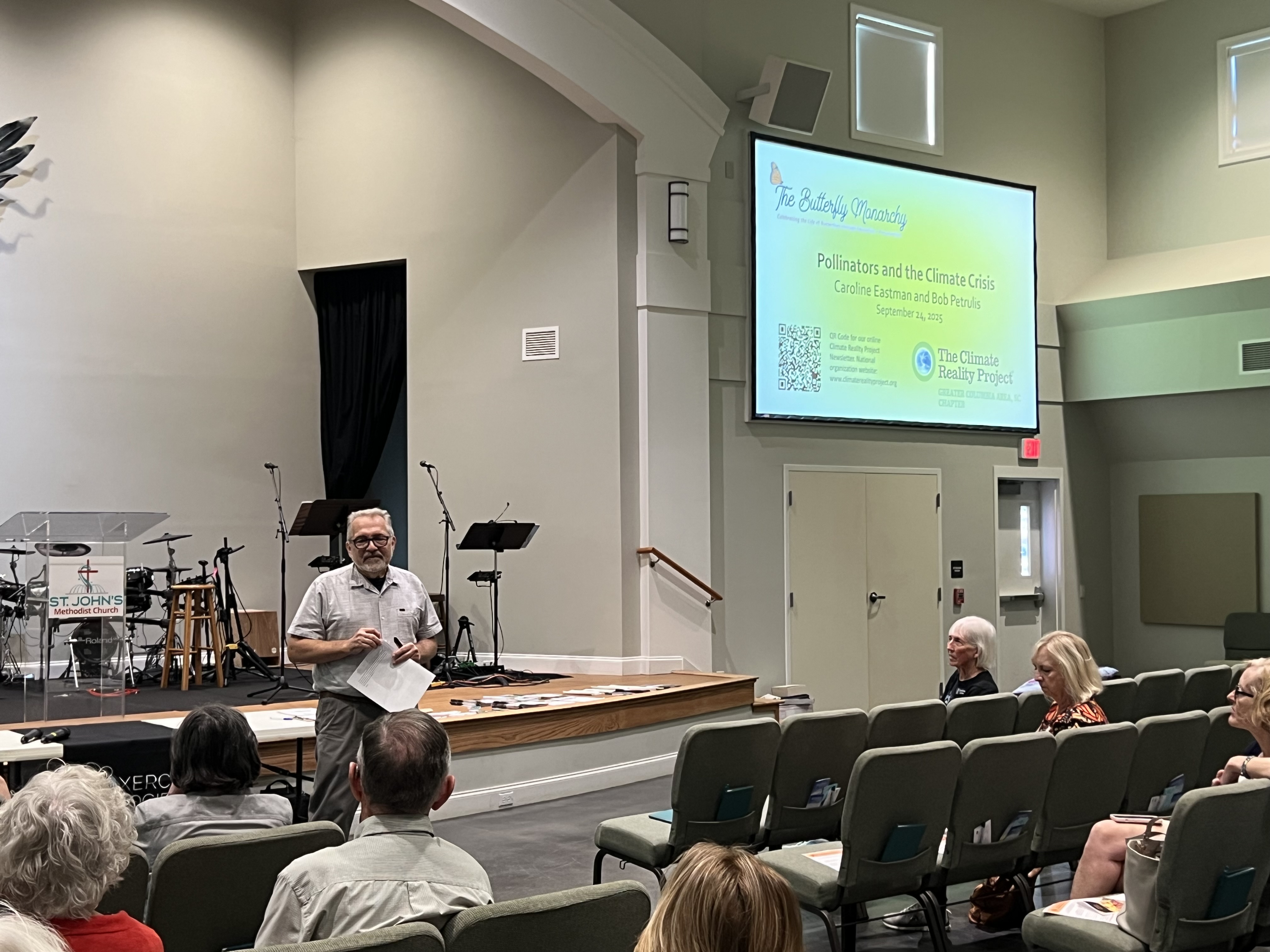
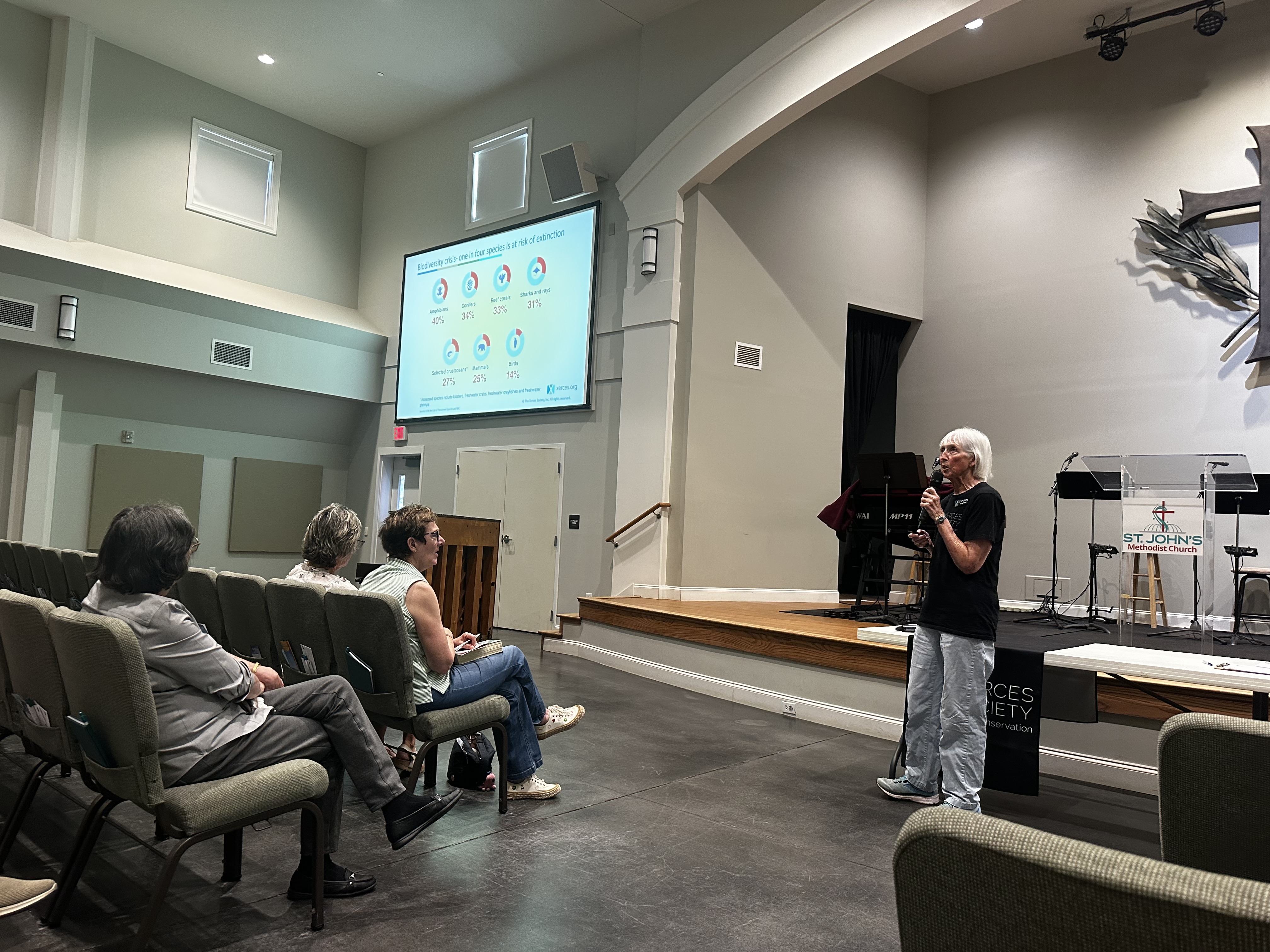
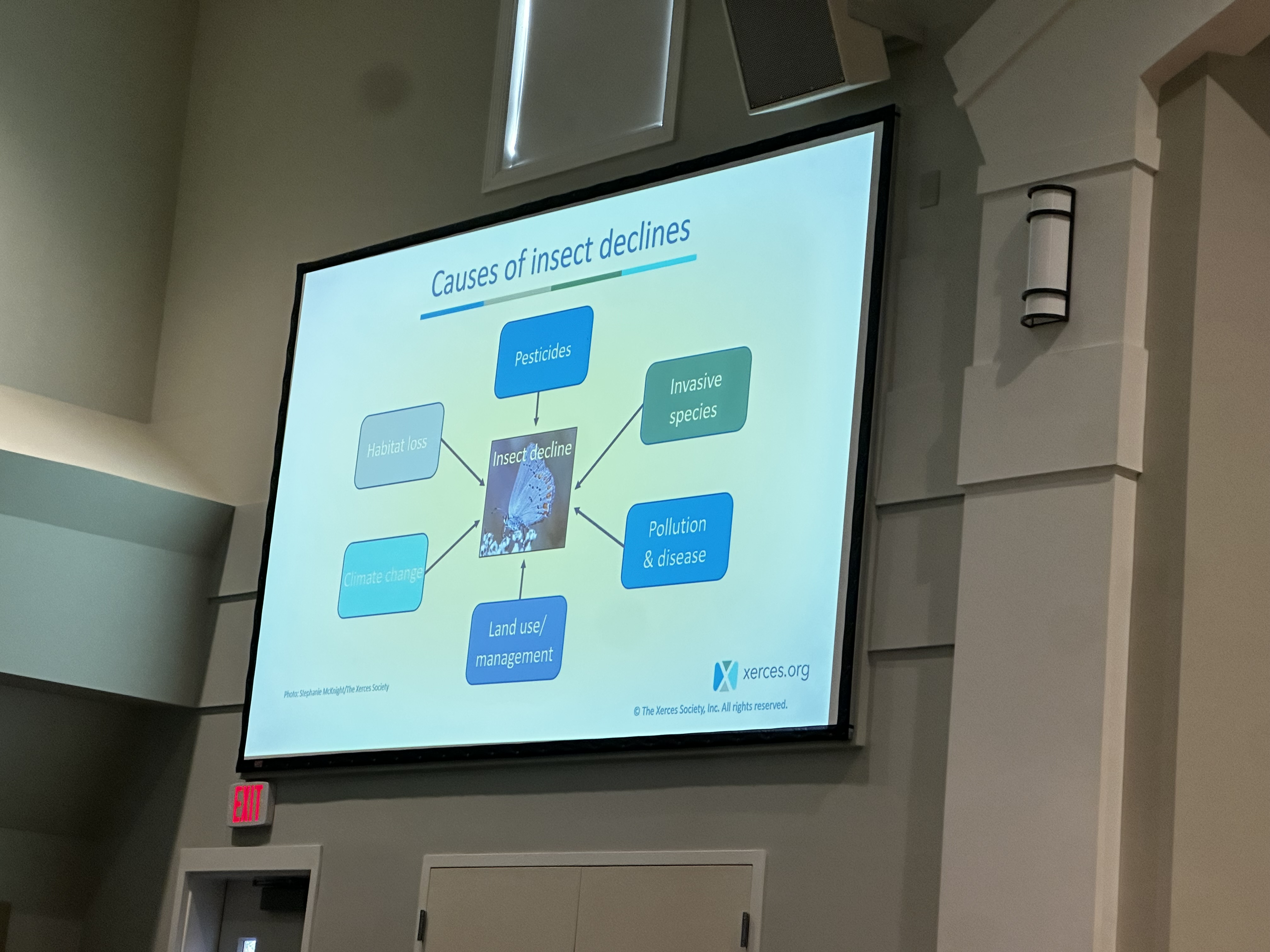
The Butterfly Monarchy Club marked Climate Week with a timely discussion about how a changing climate is reshaping the world of butterflies and pollinators. On Thursday members and guests gathered at St. John’s Methodist Church to hear from Dr. Caroline Eastman and Dr. Bob Petrulis, both active leaders in the Climate Reality Project. In addition, Dr. Eastman also serves as a Xerces Ambassador, bringing further expertise on pollinator conservation.
“Shifts in rainfall, rising temperatures, and stronger storms are impacts of climate change that South Carolinians can expect in the coming years,” said Dr. Bob Petrulis. “They’re already influencing when flowers bloom, how long nectar lasts, and whether pollinators like butterflies can find food when they need it most.”
Dr. Caroline Eastman added, “When the timing is off—when plants and pollinators no longer sync up—the survival of entire species can be at risk. But the good news is that local choices matter. By planting native flowers, reducing pesticide use, and creating safe spaces in our own yards, we’re helping to build resilience.”
The speakers reminded the group that while climate change is global, solutions can be personal and community-based.
“It’s easy to feel overwhelmed by climate change, but today’s program gave us hope and concrete steps we can take right here in Aiken,” said Susan Potter, President of the Butterfly Monarchy Club. “Planting milkweed and other pollinator-friendly plants is one of the simplest, most effective actions we can take, because pollinators will be struggling to adapt right along with us.”
 The Butterfly Monarchy Club