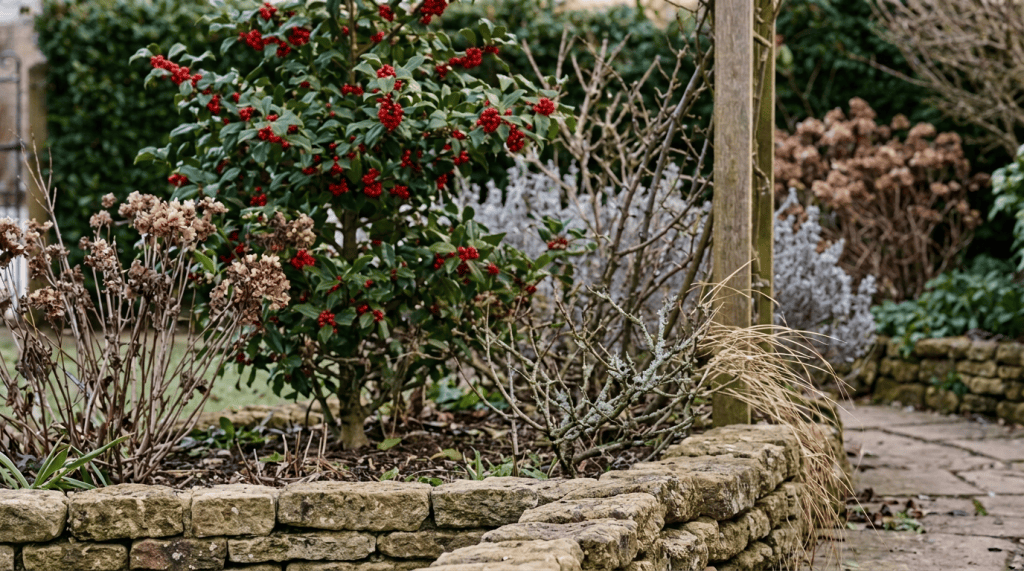
A garden can be a valuable butterfly habitat even when nothing appears to be fluttering. Many species remain in the landscape throughout winter, sheltered in life stages that are easy to overlook.
Leave some leaves. Keep fallen leaves in garden beds, beneath trees, or in a corner. If paths and lawn areas need clearing, gently rake leaves into a suitable habitat area. Keep them whole rather than shredding them, which can harm insects hidden inside.
Keep some stems and branches standing. Chrysalises may be attached to stems or tucked among vegetation. Avoid cutting every perennial to the ground. A small, undisturbed patch of grasses, stems, and twigs can offer valuable shelter. Look before you prune. A chrysalis may resemble a dried leaf or a small twig. Inspect plants before trimming, and leave occupied stems undisturbed whenever possible.
Make room for a quiet corner. A modest area of leaf litter, shrubs, or brush can provide winter cover. Keep walkways clear and garden edges neat while allowing a sheltered interior to remain natural.
Keep late blooms available. While monarchs are still passing through, leave nectar flowers blooming as long as conditions allow. Native asters, goldenrod, and other locally appropriate fall flowers can help provide food.
Plan next season’s habitat. Use the quieter months to choose native host plants for caterpillars and nectar plants that bloom at different times. Include native milkweed for monarchs, and consider the needs of other local butterfly species as well.
Avoid pesticide use. Protect caterpillars and other insects by making habitat care your first approach and
avoiding unnecessary insecticide applications.